fbpx

Embryo Donation vs. Other Fertility Treatments

Embryo Donation

Embryo Donation vs. Other Fertility Treatments

Introduction to Fertility Treatments

Navigating the world of fertility treatments can seem like trekking through a dense forest without a map. But fear not, for we’re here to guide you. At its core, Embryo Donation or fertility treatments aim to help individuals or couples conceive a child when natural methods hit a wall. There are several paths one can take in this journey, each with its own set of steps and outcomes.

Embryo donation is one such path, offering a unique blend of hope and science. But it’s not alone. From in-vitro fertilization (IVF), where eggs are fertilized outside the body, to intrauterine insemination (IUI), a process that directly inserts sperm into the uterus, options abound. There’s no one-size-fits-all here; what works wonders for one couple might be a less fitting choice for another.

Understanding the landscape of fertility treatments is the first step in making an informed decision that aligns with your dreams of parenthood.

Embryo Transfer


Understanding Embryo Donation

Embryo donation is when couples or individuals who have gone through IVF treatments decide to donate their unused embryos to others struggling with infertility. It’s like giving someone a precious gift that could grow into a life.

This option is often more affordable than going through IVF yourself since the major costs were covered by the original couple. Think of it as getting a head start. You’re not starting from scratch; these embryos are ready to go. Plus, it’s not just about money. It’s also about the chance to become a parent when other methods might not have worked.

With embryo donation, you’re stepping into a process that’s a bit simpler, emotionally and financially. It’s straightforward but packed with hope.

Pros and Cons of Embryo Donation

Embryo donation is a choice for couples struggling to conceive, offering a different path than IVF, surrogacy, or adoption. Here’s a straightforward look at its pros and cons.

Pros: First, it’s cost-effective. Compared to IVF, it’s less expensive since the embryos are donated, cutting down on the high costs of creating new embryos. Second, it gives embryos a chance at life, appealing to many prospective parents’ ethical or moral values. Plus, it can shorten the journey for those waiting to start a family, bypassing some of the lengthy processes involved in other fertility treatments or adoption.

Cons: However, it’s not without downsides. There can be legal and emotional complexities. The process involves legal agreements to ensure clarity on parental rights, which can get complicated. Emotionally, parents must reconcile with the fact that the child will not have their genetic makeup, which can be difficult for some. Also, the availability of suitable embryos might be limited, leading to potential wait times.

Ultimately, choosing embryo donation involves weighing these factors against personal values and circumstances. It’s one path among many, each with its own set of considerations.

IVF and Its Place in Fertility Options

IVF, short for in vitro fertilization, is a heavyweight contender in the fertility treatment arena. Let’s break it down simply: in IVF, eggs are taken out from a woman’s ovary, fertilized with sperm in a lab, and then the embryo is placed back in the uterus. It’s like a scientific love match made outside the body.

Why do people choose IVF?

Fertility issues come in all shapes and sizes, and sometimes, simpler methods just don’t cut it. IVF comes into play when other treatments have taken a swing and missed.

But here’s the deal, it’s not cheap. We’re talking about several thousand dollars per cycle, and sometimes it takes more than one attempt to hit the goal. Despite the cost, for many, IVF is the preferred path because it has a good success rate. Depending on factors like age, the specifics of the fertility issue, and the clinic’s success rate, IVF can often offer the best shot at parenthood compared to other fertility treatments.

In comparing IVF with embryo donation, which involves receiving a donated embryo, it’s crucial to weigh all sides. IVF allows for a genetic connection with at least one parent, which is a big deal for some. On the flip side, embryo donation might be less expensive and less physically demanding than IVF.

When you’re standing at the crossroads of fertility treatments, it’s about finding the right path for you, factoring in cost, physical and emotional toll, and the endgame of holding your baby.

How Does Embryo Donation Compare to IVF?

Embryo donation is an option for people looking to start or grow their family, standing out as both a unique and practical choice, especially when compared against the more talked-about In Vitro Fertilization (IVF).

What you need to know:

IVF involves combining eggs and sperm outside the body to create embryos, which are then transferred to the uterus. It’s a go-to method for many, but it’s neither quick nor cheap. On average, an IVF cycle can set you back about Rs. 10,00,000 to Rs. 15,00,000. Now, consider embryo donation.

This process utilizes embryos that others, who’ve undergone IVF, choose not to use. Generally, the cost of receiving donated embryos is significantly lower, often ranging from Rs. 2,00,000 to Rs. 5,00,000. This includes the fees for preparing and transferring the embryos. Not only does this make embryo donation a more affordable alternative, but it also gives embryos a chance at life, a point that appeals to many hopeful parents. On the flip side, while IVF offers a possibility of a genetic connection to one or both parents, embryo donation does not.

Every family’s priorities are different, but if reducing costs while maximizing the chances of growing your family sounds right to you, embryo donation could be your answer.

Surrogacy: Another Path to Parenthood

Surrogacy offers a different journey to becoming parents. It involves another person carrying and giving birth to your baby. This option works well for those who might have complications with pregnancy or who cannot carry a pregnancy themselves. Surrogacy can be pricey, with costs ranging from Rs. 25,00,000 to Rs. 75,00,000. These numbers include compensation for the surrogate, medical expenses, legal fees, and agency fees if you go through one. Despite the high cost, it creates a unique bond and brings the joy of a child to those who might not have another way to experience pregnancy and childbirth.

Remember, every family’s path to parenthood is unique, and surrogacy is just one of many options available.

Embryo Donation vs. Surrogacy: Key Differences

Embryo donation and surrogacy are two paths to parenthood, but they’re quite different. With embryo donation, couples or individuals receive an embryo from donors. This embryo is then transferred to the recipient’s uterus. It’s less expensive and usually faster than surrogacy.

Surrogacy involves another woman carrying and giving birth to a baby for you. It’s costlier, primarily due to legal fees, compensation for the surrogate, and medical expenses. One key difference is genetics. In embryo donation, the child might not be genetically related to you. In surrogacy, especially gestational surrogacy, the baby can be genetically yours if your egg or sperm is used. Surrogacy provides a genetic link, making it a preferred choice for some.

Yet, embryo donation could be your go-to for a quicker and more budget-friendly option. Each route has its pros and cons, depending on what you value most in your journey to parenthood.

Adoption as a Fertility Option

Adoption is a path many take when considering starting a family. It’s not a medical procedure but is about opening your home to a child in need. The process can be long, sometimes taking years, and it can also be costly. Adoption fees can range from a few thousand rupees to over Rs. 35,00,000 depending on several factors including the type of adoption, the agency involved, and the country of the child’s origin. Yet, for many, the emotional rewards of providing a child with a loving home far outweigh the financial and time commitments.

Unlike fertility treatments, such as IVF or embryo donation, which are focused on biological connections, adoption creates family bonds through choice and love. It’s a different journey, but for some, it’s exactly the right path.

Making the Choice: Factors to Consider

When you’re looking at your options for starting or growing your family and fertility treatments are on the table, it’s a big decision. Each choice, embryo donation, IVF, surrogacy, or others, comes with its own set of considerations. First, think about cost. IVF and surrogacy often come with higher price tags. Embryo donation might be more budget-friendly but check the specifics.

Next, consider the emotional journey. IVF can be emotionally and physically taxing. Embryo donation might offer a less intense experience but comes with its unique emotional considerations, such as the child’s genetic background. Success rates are crucial too. They can vary widely, so ask for numbers related to your age and situation.

Lastly, don’t forget about the time involved. Some treatments require longer periods before you can try for a pregnancy. Every couple’s or individual’s journey is personal. Ensuring you’re informed and supported in your choice is key.

Conclusion: Finding the Right Path for You

Choosing between embryo donation and other types of fertility treatments is a deeply personal decision. When making this choice, think about what feels right for you and your family. Embryo donation may offer a unique opportunity to experience pregnancy, often at a lower cost than treatments like IVF.

Yet, it comes with considerations such as the genetic link to the child. Other treatments, such as IVF or IUI, can be more expensive and involve a more intensive process, but they may offer a different set of advantages, including a genetic connection to both parents. Remember, there’s no one-size-fits-all answer.

Weigh the pros and cons, consider your emotional and financial readiness, and consult with healthcare professionals. Ultimately, the best path is the one that aligns with your values, desires, and circumstances.

7 Days After Embryo Transfer Symptoms

In vitro fertilisation (IVF) has become a relatively common path to pregnancy for many couples struggling with infertility in recent decades. While the basic IVF procedure of fertilising eggs with sperm in a lab, growing viable embryos, and transferring them into the uterus remains scientifically complex, it is increasingly well-understood. However, what happens in the days immediately following the embryo transfer as women wait anxiously to learn if implantation has occurred still feels mysterious for most. 

As the embryos implant, the body begins undergoing rapid changes that can cause various symptoms, some similar to typical early pregnancy symptoms. Knowing what to expect within 7 days after embryo transfer symptoms can provide reassurance during this anxious two-week wait. This blog outlines the most common symptoms seen 7 days after an embryo transfer procedure.

7 Days After Embryo Transfer Symptoms:

Implantation Bleeding

Implantation Bleeding

Anything that involves bleeding may sound troublesome, but this is common for most patients and isn’t anything to worry about. This happens when the fetus implants itself into the uterus lining. 

  • The bleeding is less and subsides in a few days. 
  • This spotting is usually light pink or brown and lasts only briefly.  
  • Even though most patients don’t report pain or excessive bleeding, it’s vital to see a doctor if any of those problems persist. 
  • Although it is one of the most common 7 days after embryo transfer symptoms, it may still not necessarily affect everyone. 

Read Also: After Embryo Transfer Day by Day Symptoms

Pain/Tenderness in Breasts

Pain Tenderness in Breasts

Breast tenderness is a common symptom about 7 days after an embryo transfer.

  • It occurs when rising hormones like estrogen and progesterone prepare the breasts for potential milk production to nourish a growing embryo. 
  • The swelling, heaviness, or soreness felt in the breasts provides reassuring evidence of appropriate hormonal shifts in the early stages of pregnancy. 
  • Some patients even experience their nipples sticking out more. These symptoms subside in a few days.

Constant Urination

Constant Urination

Constant urination is very common for 7 days after embryo transfer symptoms as the body ramps up blood production to supply the developing embryo. 

  • The extra blood circulating through the system filters through the kidneys more often, leading to frequent bathroom trips. 
  • While having to urinate more frequently can feel disruptive, it provides reassuring evidence that pregnancy-related changes are underway after the embryo transfer. 
  • As long as the urine appears normal and urination isn’t painful, it’s no cause for concern.
  • Painful urination, excessive bleeding, and fever may be huge red flags and must be checked out by a doctor right away. 

Read Also: Positive Signs After Embryo Transfer

Fatigue

Fatigue

This is another common problem that may not be painful or as inconvenient as some of the other things mentioned earlier, but it’s still dreaded by many. Fatigue is common for 7 days after embryo transfer symptoms.

  • This exhaustion reflects the dramatic rise in progesterone secretion from the corpus luteum, essential for supporting early embryo development.  
  • Hormonal changes and several other changes your body goes through cause heavy bouts of fatigue. 
  • While this is commonly not something to worry about, you can always consult your doctor to resolve any doubts.

Nausea

Nausea

While nausea can be hectic, it may not seem like a red herring for people looking to start a new family. This is because nausea and/or vomiting isn’t just one among the 7 days after embryo transfer symptoms, but it’s also the earliest indicators of pregnancy. 

  • The rapidly shifting hormonal environment in the week after embryo transfer can cause nausea for some women. 
  • Despite nausea causing discomfort, feelings of nausea after an embryo transfer is seen as a positive development, and the medical community even sees it as the first concrete sign of pregnancy. 

Read Also: The Science Behind No Symptoms After Embryo Transfer: Exploring the Possibilities

Shift in Appetite

Shift in Appetite

This is one of the typical 7 days after embryo transfer symptoms because it affects pretty much everyone. 

  • Some may have a decreased appetite, and some may experience an increased appetite.
  • The reasons for pregnancy cravings are due to hormonal changes and nutritional deficits.
  • Although a shift in appetite is common, it’s still essential to maintain a well-balanced and nutritious diet. 

Digestive Problems

Digestive Problems

Digestive problems are common for 7 days after embryo transfer symptoms

  • Women who face this symptom may usually experience many digestive issues, and some may even have only one or two problems. 
  • While this isn’t anything to worry about, it’s important to seek emergency medical help if it gets too unbearable or painful. 
  • Most of these digestive issues could be heartburn, bloating, excess gas, and constipation. Some may even experience weight gain to a certain degree. 
  • Mainly, hormonal changes and fluid retention cause these problems.

Read Also: What Foods to Avoid After Embryo Transfer: A Guide

Shift in Weight

Shift in Weight

While a lot is known about weight gain as a common symptom after 7 days of embryo transfer, an often neglected fact is that it isn’t the only change in weight your body may go through. 

  • Fluctuation in the weight of a pregnant person is normal, and the severity of these fluctuations increases later in pregnancy. 
  • There may be noticeable weight gain and even weight loss. 
  • Other factors like pregnancy cravings or a decreased appetite may also affect this. This may be discomforting, but nothing to worry about. Your doctor will usually inform you when to worry about massive fluctuations in weight. 

Read Also: What To Eat After Embryo Transfer IVF?

The Bottom Line

Starting a new family by welcoming a child can be daunting. It can be even more daunting for people who choose to go with an embryo transfer. There are many common 7 days after embryo transfer symptoms. Most of these symptoms are also harmless and are faced by most pregnant people because of the several bodily changes that occur before, during, and after pregnancy. 

Try to take care of yourself physically and emotionally as best as possible, asking for support if needed. These symptoms are simply signs of changing hormones from implantation and early pregnancy. 

Undergoing IVF treatment? The two-week wait after embryo transfer can feel full of anxiety and uncertainty. Our experts guide patients through this period, providing reliable information on what symptoms to expect at 7 days post-transfer and offering prompt medical advice when needed. Call today to discuss our embryo transfer process and compassionate aftercare.

Read Also: Embryos – What You Need To Know About Them

After Embryo Transfer Day by Day Symptoms

After Embryo Transfer Day by Day Symptoms: Stepping into parenting is one of the most significant and intimate phases in everyone’s life. Nonetheless, for most couples and people with fertility problems, IVF becomes a shining ray of hope. IVF is a revolutionary intervention in assisted reproductive technology that has transformed the way infertility is handled in the world, and embryo transfer forms a crucial stage of this treatment.

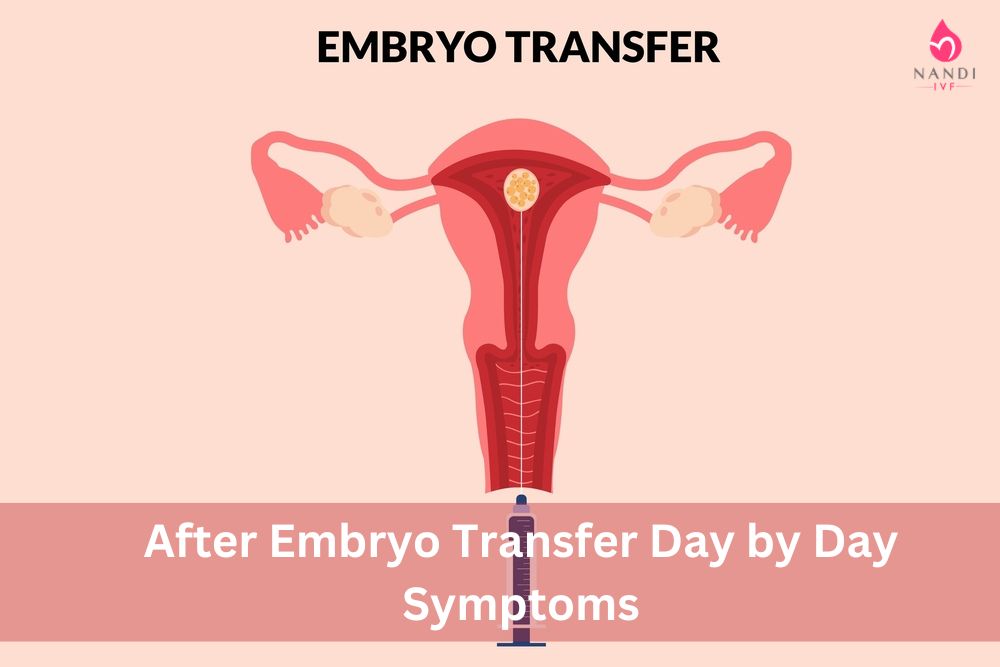
Embryo transfer represents the final stage of in vitro fertilisation (IVF) treatment. It is only after this stage that intended mothers can perform the pregnancy test. The procedure involves the delicate placement of the highest quality embryo into the patient’s uterus using a catheter. Many patients have concerns and questions regarding the possible symptoms that may occur following the embryo transfer. This post aims to explain the procedure; the most common after embryo transfer day by day symptoms, and their duration. 

What is an Embryo Transfer?

Embryo transfer is a straightforward and simple procedure that follows in vitro fertilisation (IVF). The procedure aims to enhance conception after fertilisation through the IVF process. The procedure starts with anaesthesia given, and then a slender catheter containing the specified number of embryos and a small amount of fluid is gently guided through the cervix into the uterus. The last step of embryo transfer includes the release of embryos into the uterus. After this, the patient needs to keep track of after embryo transfer day by day symptoms to ensure the success of the IVF treatment

What is an Embryo Transfer

How Long Does an Embryo Transfer Take?

 An embryo transfer typically lasts from 15 to 30 minutes. It involves the doctor using a speculum to insert a thin, long catheter into the vagina. The catheter containing the embryos transfers them into the uterus through the cervix. A small amount of fluid included in the catheter facilitates the process. After inserting the embryos, the patient can take rest if necessary. The procedure is the least invasive, and the post-embryo transfer duration maybe 30 minutes, depending on the patient’s comfort. The procedure can take two to four hours, including the setup, rest period, and transportation.

Read Also: The Science Behind No Symptoms After Embryo Transfer: Exploring the Possibilities

After Embryo Transfer Day by Day Symptoms

Post-blastocyst embryo transfer takes about 14 days before an intended mother can check for pregnancy. Following are some of the after embryo transfer day by day symptoms to look out for:

Days 1-3: The Early Days

 It is common for women to experience mild cramping during the first few days after the procedure.

  • Spotting or light discharge may occur as the embryo settles into the uterus. It can also result from irritation caused to the cervix during the procedure.
  • Immediately after the embryo transfer, the body undergoes several changes; it is common to feel tired during the first few days after the procedure. Fatigue is also one of the key side effects of medications taken during IVF treatment.

Days 4-6: Implantation Window

  • As the embryo burrows into the uterine lining, the progesterone in the body begins to maintain the endometrium in an optimal state to support the embryo implantation. It leads to light bleeding or spotting, typically pinkish or brownish.
  • Some women may feel mild cramping or twinges as the embryo implants into the uterine lining.
  • There is an increase in basal body temperature by 1 or 2 degrees during the implantation window.

Read Also: 7 Days After Embryo Transfer Symptoms

Day 7: Early Pregnancy Symptoms

  • The hormones administered during the embryo transfer can cause harder-than-normal, swollen, or tender breasts. Additionally, there can be tingling in nipples or even darkening of areolas. These changes are similar to what an individual may experience before her period.
  • An increase in hCG pregnancy in blood and urine right after embryo implantation leads to increased urination. Additionally, increased blood flow to the pelvic area can also result in frequent urination.
  • Changes in hormones make individuals emotionally sensitive. Getting irritated and depressed is quite common.
  • Hormonal changes and increased levels of human chorionic gonadotropin (hCG) in the blood can cause nausea and dizziness. 
  • Implantation bleeding results from an embryo’s implantation into the uterine lining. It generally lasts shorter than a regular period. Not everyone experiences implantation bleeding as one of the embryo transfers day by day symptoms, so don’t worry if you don’t see any.

Read Also: What Foods to Avoid After Embryo Transfer: A Guide

 Day 8: Placenta Starts Forming

After one week of embryo transfer, the placenta starts forming when an embryo becomes more established in the uterine lining. Some of the symptoms that appear during this phase include:

  • As the embryo embeds into the uterine lining, one may experience mild cramping or pain in the lower abdomen. However, this is not a universal symptom, and some may not experience this symptom.
  • Sleeping more at night, having trouble getting up, and feeling foggier and tired during the day can result from changing hormones and increased blood volume.

 Day 9 and Beyond – Embryo Development Phase

  • After successful implantation, the proliferation of glandular tissue in mammary glands increases the sensitivity and soreness of breasts. This breast tenderness and soreness feel similar to what some people experience before their menstrual cycle. 
  • As the progesterone and estrogen levels fluctuate, the appetite also changes. Increased levels of heartburn and acid reflux due to pregnancy hormones can result in loss of appetite. This fluctuation can also cause increased appetite in some cases. 
  • Elevated progesterone levels in blood vessels lead to vasoconstriction, which results in mild and frequent headaches. One should keep their body hydrated and contact their healthcare provider if the headache persists or worsens.

Day 14: Time For a Pregnancy Test

  • White vaginal discharge with a slight odour indicates successful embryo transfer. However, it is always recommended to visit your doctor if you experience itching, burning, or extremely smelly discharge.
  • A missed menstrual cycle indicates a successful pregnancy, especially if you are otherwise consistent. Thus, in case of missed periods, it is a good idea to conduct a pregnancy test and contact your fertility clinic.

embryo development

 The journey to seeing positive pregnancy test results after embryo transfer can be challenging both – physically and emotionally. However, it is also essential to realise that each individual’s experience is unique, and after embryo transfer day by day, symptoms such as hormonal fluctuations, spotting, breast soreness, etc.,  may occur at different times and to varying degrees. The key is to remain calm and seek help from a fertility specialist or other health care provider if you have any worries. Remember that not every symptom indicates or guarantees a particular outcome. It is always a good decision to seek professional help and receive the best action and advice.

Read Also: What To Eat After Embryo Transfer IVF?

Wrapping up,

In vitro fertilisation, or IVF,  emerges as a beacon of hope, offering individuals and couples the opportunity to realise their dreams of becoming parents while overcoming all fertility challenges. Understanding the intricacies of the step-by-step IVF journey and receiving proper guidance about after embryo transfer day by day symptoms makes it easier for them to manage expectations prudently and prioritise their mental well-being. 

Nandi IVF strives to provide low-cost and high-quality pre and post-fertility treatments, care and guidance for couples facing difficulty in conception. The clinic offers various services to assist in solving issues experienced by both –  men and women. The clinical, surgical, and psychological interventions with modern equipment and the highest international quality standards help individuals and couples receive unwavering support, a personalised approach to sailing through after embryo transfer day by day symptoms, and a secure environment to embark on the IVF adventure.  Schedule an appointment today!

Read Also: Normal Pus Cells in Urine During Pregnancy: Comprehensive Guide

Read Also: Understanding the Signs of Bad Egg Quality – Taking the Right Steps

Read Also: 7 Steps to Getting Pregnant with Blocked Fallopian Tubes

Read Also: Comparing Tubectomy and Vasectomy: Which Option is Right?

Positive Signs After Embryo Transfer

Positive Signs After Embryo Transfer: During IVF, a woman undergoes an embryo transfer, which is a process of implantation of the newly-formed embryo into the woman’s uterus. In India, 27.5 million people face infertility, and many couples choose IVF involving embryo transfer.

The implantation is done with fresh or frozen embryos. After the embryo transfer, there is a two-week wait between the transfer and when you can take a pregnancy test. This wait can be a moment filled with many emotions for both parents awaiting positive results. 

During this wait, people can have various symptoms with different meanings. It is common to have various side effects, positive effects, or no effects at all. This article will focus on all the positive signs after embryo transfer. 

Common Positive Signs After Embryo Transfer

Some positive signs after embryo transfer include bleeding or spotting, bloating, soreness in breasts, cramping, fatigue, different types of discharge, and many more. Let’s look into each of these signs one by one.

Spotting and Bleeding:

Bleeding is considered to be one of the positive signs after embryo transfer. Bleeding means the embryo has found its place in the uterine wall and is implanted. Many people experience bleeding and get concerned immediately, but it is a positive sign. Likewise, some people may observe spotting on their toilet paper or underwear in a week or so after the embryo transfer.

The spotting can also occur due to the medication prescribed during the IVF treatment. And if you experience heavier bleeding than normal, be sure to consult the doctors.

Read Also: 7 Days After Embryo Transfer Symptoms

Soreness and Pain In Breasts:

Soreness and pain in the breasts is a symptom experienced by many women during their menstrual cycle. This soreness can be an early sign of IVF pregnancy. If your breasts are swollen, tender, and sore to touch, it can signal that the embryo transfer was a success. However, this is not a confirmed positive sign, as the soreness can happen due to the increased level of hormones like progesterone supplements from the IVF treatment a woman is receiving.

Cramping or Bloating:

Positive Signs After Embryo Transfer: During the implantation of the embryo, bleeding occurs, and along with that comes cramps, which is also a positive signs after embryo transfer. Cramping can signify that the embryo is successfully transferred. This cramping can also occur while taking progesterone medication during IVF treatments. 

One other positive effect of this progesterone medication can be bloating. It can be a sign of successful embryo transfer. You have to consult with your doctors if you experience extremely painful cramping. 

Fatigue or Tiredness:

Feeling tired or exhausted is the most known pregnancy symptom from conception. The metabolism of the tissue in the uterus relies on the hormone progesterone to trigger a process called decidualization in the lining of the uterus. This helps prepare the uterine environment for a potential pregnancy. Additionally, progesterone plays a role in preventing contractions of the muscular layer of the uterus, which could interfere with pregnancy.

The hormone levels rise in the first trimester and divert all the energy to the baby’s development. The blood volume also increases in the first trimester to supply the blood to the baby through the placenta, making the mother’s body more tired.

It is common for fertility drugs to make you feel tired, but feeling exhausted can occur immediately after the embryo transfer, which is a positive sign of embryo transfer.

Read Also: The Science Behind No Symptoms After Embryo Transfer: Exploring the Possibilities

Discharge Categories:

Different people experience different types of discharge during the IVF period, and it is one of the positive signs after embryo transfer. The discharge can also occur because of the progesterone tablets you take during the treatment, showing symptoms like itching, burning, and discharge. 

Some discharge types as positive signs after embryo transfer are given below.

  • Water of Clear Discharge – You may experience clear and watery discharge after the IVF treatment. This is considered an early pregnancy indicator.
  • Mucus Discharge and White Discharge – Some women experience white, mildly smelling discharge, a common indicator of early pregnancy after IVF treatment. Some women experience a thick, pale yellow discharge.
    This discharge is similar to a woman’s mucus plugin in the vagina above the cervix. This white and mucus discharge is the indicator of successful embryo transfer and pregnancy.
  • Brown Discharge – Seeing mucus-like discharge, white discharge, or clear discharge is common in women with or without pregnancy, but if a woman is experiencing brown discharge that can last upto 2-3 days, that could mean that the woman has experienced the implantation.
    Brown discharge can be seen when a person is experiencing spotting. This is the sign of implantation and a positive signs after embryo transfer.

Now, these discharges are normal and positive signs for pregnancy, but if you experience green, gray, or foul-smelling and if you experience itching, burning, or swelling, you need to visit your doctor and consult them immediately. 

Read Also: What Foods to Avoid After Embryo Transfer: A Guide

No Symptoms After an Embryo Transplant: Is it Normal?

You commonly have zero symptoms after an embryo transfer but still have a positive pregnancy. The symptom a woman experiences generally is due to hormones like estrogen and progesterone supplements given to them. Around 10-15% of patients do not see symptoms during the 11-day wait. 

Some other Positive Signs

With the above-mentioned positive signs, A woman can experience some signs during the IVF treatment, which they normally experience in conceiving a child. Some of these are given below.

  1. Need to Urinate According to doctors, if you can no longer resist urinating twice or thrice a night, it could be because you are experiencing early signs of pregnancy. The frequent need to urinate may be the very first indication of pregnancy.This need occurs because when you become pregnant, your body produces and releases the human chorionic gonadotropin (hCG) hormone and more progesterone. As a result of these hormones, your need to urinate will increase more than normal.In contrast, if during the IVF treatment, you experience the need to urinate and with that, you also experience blood in your urine, fever, pain while urinating, nausea, and vomiting, you need to seek some medical attention as it can be the indication of urinary tract infection.
  2. Missed Periods and Headaches – The most positive signs after embryo transfer that indicates pregnancy is a missed period. If you are someone whose periods are generally on time and missed one after the embryo transfer, it will indicate that the implantation is successful.

Some women experience headaches resulting from increased hormonal activity in the body during IVF treatment. 

Read Also: What To Eat After Embryo Transfer IVF?

Choose the Best IVF Centre

Couples struggling with conceiving due to various infertility issues can adopt IVF or IUI as per their requirements and convenience. The aforementioned positive signs after embryo transfer will help you identify the procedure’s success. 

With their experienced fertility specialists, Nandi IVF has been offering cutting-edge techniques to turn the hope of their patients into reality. You can visit the center for more details about IVF at Nandi IVF.

Read Also: Understanding the Signs of Bad Egg Quality – Taking the Right Steps

Read Also: After Embryo Transfer Day by Day Symptoms

Bring A Baby Into Your Home With Nandi IVF

    Call Now Whatsapp Email