fbpx

Things To Consider When Choosing A Fertility Clinic

improve the quality of egg for ivf naturally

Things To Consider When Choosing A Fertility Clinic

Many couples are unable to start a family due to fertility issues. If you have been trying to have a baby but have not been successful, it is highly recommended to consult a fertility specialist for better guidance. With the development in medical science, the IVF procedure has become safer and easier than ever before; all you need is the guidance of a erudite and experienced specialist. The internet is inundated with contact details of an array of IVF Specialists. However, you should be wary before you zero in on your medical expert. After all, it is the question of your baby. So, let’s talk about the key pointers that you must ponder on before visiting an IVF specialist.

The success rate of the clinic

Most fertility clinics publish their success rates on their websites. However, rather than taking their success rates at face value, it’s prudent to do a thorough background check from reliable sources. It is imperative to understand about the varied rates associated with each method and that they vary depending on the patient’s age group. Talk to previous patients to get a sense of the environment.

Experience of clinical staff

The clinical staff consists of not only doctors, but also counselor’s attendants, financial advisors, and lab personnel. An individual visit and interaction with a portion of the staff can help you get a sense of the clinic’s atmosphere. Doctors and embryologists are typically expected to have at least 5-10 years of experience and a Master’s Degree.

‘Old’ does not always imply the best possible outcome. A good clinic is defined by the implementation of quality standards, protocols, and international state-of-the-art technology, as well as experience and qualifications.

Facilities Provided, Technology and Equipment Utilized

To provide maximum convenience to the couple undergoing treatment, the clinic should ideally offer all of the most recent fertility treatments on its premises. With remarkable advances in medical science, the chances of conception have increased dramatically. The technological infrastructure and equipment used in a fertility center are just as important as the specialists’ education and qualifications. This is because the more modern and advanced the technology, the greater the chances of pregnancy success. If high-tech equipment is more important than the qualifications of doctors and embryologists.

Transparency in Costs and Procedures

In terms of medical and financial procedures, effective fertility treatment will adhere to professional ethics and transparency. Check to see if pre- and post-treatment counseling is included in the cost. The price agreed upon with you at the outset should be the final price you pay at the end. This will help you plan your finances and make financial arrangements as needed. If there is a system, the clinic must notify you. Another factor to consider when deciding on fertility treatments is confidentiality.

Protocol

The issue with any new clinic is that it takes time to get into a routine because new staff arrives and there is a new environment, infrastructure, and equipment. That is one of the points where you should exercise caution. But, if not, why not? They can maintain high-quality standards if they transfer what they have learned and the protocols they previously used to the new clinic. On the other hand, a long-established clinic with no protocols and no good quality standards is possible.

What is the Cost of IVF, and What does it Include?

Assisted reproductive technologies have become a safe and popular method to help couples conceive and have a lovely family. It allows people with reproductive issues to get the necessary help and have healthy children. IVF, or In Vitro Fertilization, is the most common and productive among these technologies. 

In the process, the embryo or egg is developed outside the body and then inserted into the womb. If you are also facing reproductive problems, consult an IVF specialist in Delhi now.

What is IVF?

In Vitro Fertilization allows the growth of an embryo outside the mother’s body, which is further implanted in the womb. It involves several steps, which can take months to complete. Also, the female has to take medications to induce fertilization and retrieve mature eggs. 

  • In vitro fertilization is an ART or assisted reproductive technology that helps couples conceive a healthy embryo.
  • The sperm can be from the male parent or a donor. If the sperm shows low motility, it can be injected directly into the egg.
  • IVF is among the most prevalent techniques with a higher success rate. However, the results and effectiveness depend on age, health issues, etc.

Finding the best IVF clinic in Delhi is essential to increase the possibility and have expert consultations.

Who should opt for IVF?

An experienced IVF doctor in Delhi can conduct several tests to analyze if the couple is a good candidate for IVF. Generally, people with the following  conditions should opt for an IVF treatment:

  • Blocked fallopian tubes: The egg travels through the fallopian tubes every month to reach the uterus. However, the tubes can get blocked due to genital TB, ruptured ectopic pregnancy surgery, etc. In such a scenario, IVF is an effective option for conceiving and having a child.
  • Problem with semen: Abnormality in semen analysis can be another reason the candidate should undergo an IVF treatment. Morphology defects or motility of less than 30% can be factors that affect pregnancy.
  • Unexplained infertility: There might also be cases where the couple has normal reports but can still not conceive a child. Also, if they cannot get pregnant after two years or six to twelve Intrauterine insemination(IUI) cycles, going to an IVF specialist in Delhi would be helpful.
  • Severe endometriosis: Severe endometriosis can cause adhesions, which affect the normal functioning of reproductive organs. It also leads to slower embryo growth and can lead to blocked fallopian tubes in the woman.
  • Low Anti-Mullerian hormone(AMH): The egg reserves in a woman can decrease over time and age. It often happens due to delays in pregnancy planning, which can make it difficult to conceive a child. In such cases, the couple should seek the best IVF in Delhi to increase their possibility of pregnancy and have a healthy family.
  • Genetic disorders: Genetic disorders in parents can be passed down to the child, such as Down’s syndrome, Cystic Fibrosis, etc. Through IVF, the embryo can be tested for such abnormalities before it leads to a pregnancy. The incidences can be reduced, and it is a great option for couples with genetic disorders to have a healthy child.
  • Ovarian surgeries: Ovarian surgeries can reduce the reserves and lead to a Low probability of conceiving. Couples should consider IVF treatments in such cases.

Couples with such conditions should seek an IVF specialist in Delhi to find the best solutions for a healthy pregnancy.

Read Also: Exploring IUI vs IVF: Which Fertility Procedure is Right for You?

Cost of IVF

IVF treatment is a safe and effective way for couples to experience parenthood and create their family. One should know IVF costs in Delhi before beginning the process to understand how much they will spend.

Basic IVF treatment:

The basic IVF treatment Cost includes all the costs incurred in testing, diagnosis, and medications of the IVF process. It starts from ₹80,000 and is a primary procedure for couples to conceive. It is essential to consult an IVF specialist in Delhi to understand which plan will be successful depending on the couple’s age, health problems, and fertility.

IVF with frozen embryo transfer (FET):

Specialists can freeze the fertilized embryos for future use. However, studies show better implantation, live birth rates, and lower miscarriage and ectopic pregnancy rates using frozen embryos. FET is useful when the egg quality is lower for a healthy pregnancy in the female. IVF cost in Delhi with frozen embryo transfer is from INR 1,50,000 to INR 3,00,000 or more..

IVF with Intracytoplasmic sperm injection (ICSI):

IVF treatment with ICSI is useful in cases of male infertility with low sperm count, poor motility, or morphology. Also, if they have already done IVF with low fertilization results, ICSI can increase the possibility of pregnancy.

The costs start from INR 1,90,000 to INR 3,50,000 or more in Delhi.

IVF with donor eggs:

Some women may be unable to ovulate due to blocked or damaged tubes, sterilization, or other health conditions. Thus, they cannot have mature eggs used for fertilization in the IVF process. However, after consulting with an IVF specialist in Delhi, the couple can use donor eggs. They help select the suitable option for the couple, allowing them to conceive and experience parenthood. The IVF cost in Delhi with donor eggs starts from INR 1,70,000 to 4,50,000 or more.

IVF with embryo donation:

Specialists usually freeze multiple couples’ embryos to increase the chances of pregnancy and IVF cycles. However, women can donate the fertilized embryo if they succeed initially. It helps another couple to experience pregnancy and is similar to adopting a child. IVF with embryo donation starts from ₹40,000.

IVF with sperm donation:

When the IVF specialists cannot retrieve the semen even after using multiple methods, the couple can use donor sperm for fertilization. It helps in a higher pregnancy chance, and the couple can conceive easily. IVF cost in Delhi with donor sperm starts from INR 90,000 to 2,50,000 or more.

IVF with preimplantation genetic diagnosis/screening:

Parents with genetic disorders can screen the embryos to diagnose genetic disorders before implantation. It helps reduce the chances of diseases and ensures the child is healthy. This process can cost around ₹1.4 Lakhs to ₹2.5 Lakhs.

A couple should know these costs and understand how much they’ll need for the IVF treatment. It is necessary to consult the best IVF clinic in Delhi to decide which process will be the best to ensure higher chances of a pregnancy and a healthy child.

For Estimated Cost of IVF in Delhi Visit the Below Link

IVF Treatment Cost In Delhi

IVF process 

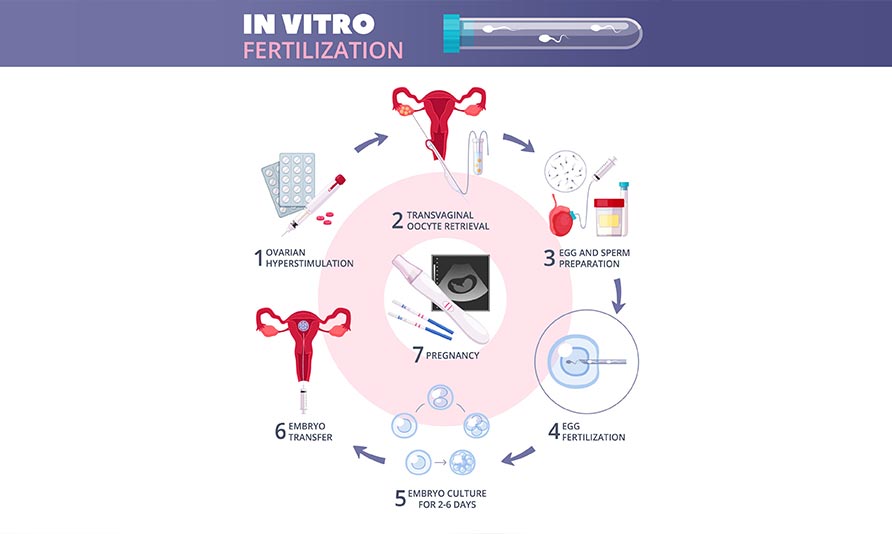
It’s important to understand the IVF process that will be followed once you opt for the procedure. It will help prepare and know how you will conceive a child. These steps are followed:

  1. The initial step involves ovulation induction, where the female has to take several medications over a few months to produce mature eggs ready for fertilization. Female fertility and egg reserves play an essential part in this step.
  2. Regular blood tests and ultrasounds track egg development and hormone levels.
  3. The next step is egg retrieval when there are enough mature eggs. It is a minor surgical process where the doctor removes the mature eggs.
  4. The specialist puts a thin and hollow tube in the ovary and follicles through the vagina, using an ultrasound to see inside. The suction device at the end of the tube pulls out the eggs.
  5. The next step is insemination, where the eggs and sperm are stored together for fertilization. Sperms with lower motility may have to be injected into the eggs directly for a higher fertilization rate.
  6. After a few days, the doctor uses a thin tube to enter the uterus through the cervix to put one or more embryos into the uterus.

Pregnancy is successful if the embryo attaches to the uterus lining. A woman may also have to take progesterone for the first few weeks after the pregnancy. It ensures that the embryo survives easily and leads to a healthy pregnancy.

IVF benefits 

It is essential to learn about the benefits of the process before opting for it. Initially, ensure that you consult an IVF specialist in Delhi for the process who suggests the best measures. Learn about the following benefits:

  • IVF is successful where other reproductive methods, such as medications or intrauterine insemination, fail. Also, severe infertility issues or fallopian tube blockages have a success rate with IVF.
  • Couples can use donated eggs, sperm, or embryos in IVF. It allows them to experience parenthood despite any health issues.
  • IVF allows parents to have a healthy child as they can screen for any genetic problems that may lead to diseases.
  • People can control when they want to have children, as they can freeze the eggs or embryos for future use.
  • IVF can lower the chances of miscarriages in women by detecting the embryo’s viability. So, the woman doesn’t have to go through the mentally disturbing face she faces after miscarriage.

These benefits of the IVF process are highly useful for couples facing fertility issues. Consult an IVF specialist in Delhi and begin your diagnosis to have a healthy and happy pregnancy.

Embarking on your journey towards parenthood can be overwhelming, but you don’t have to do it alone. Nandi IVF Centre in Delhi is committed to providing expert guidance and assistance to help you along the way. As one of the leading IVF clinics in Delhi, Nandi IVF offers a comprehensive range of fertility treatments at affordable prices, making them accessible to everyone who dreams of starting a family.

Natural IVF

If you take a look at any medical product, you will most definitely find a natural alternative to them. Such is the reach of natural remedies that even IVF-induced pregnancies’ has a natural counterpart. If you are facing infertility issues, natural IVF might be an appealing option, especially if you’re the type to be drawn toward homeopathic remedies. Before making any kind of life-altering decision, it is important to understand what that choice entails and what the safest and healthiest option for you is. Here you will learn about what natural IVF is and under what circumstances it is considered to be the best option.

Firstly, it is important to know what natural IVF actually is. The basics of an IVF are the same in this case, that is, in the lab, your healthcare provider harvests a mature egg from your ovaries and fertilizes it with sperm. The newly formed embryo is then transferred into your uterus. If things go well, you will have a successful pregnancy. In the conventional IVF cycle, there is a lot of medication involved that helps to harvest and later retrieve the eggs from the woman’s body. This is where the name ‘natural IVF’ may seem deceptive as this process is not always medication-free. Under natural IVF there are two sub-types namely, fully med-free natural IVF and minimal stimulation IVF or ‘mini-IVF’.

In the first scenario, you skip the medication process entirely, and with mini-IVF, your doctor will offer you small amounts of ovarian-stimulating medication before the egg retrieval process. Natural IVF requires you to forego the ovarian-stimulating medications, instead here, when it is time to retrieve the eggs the healthcare provider will insert an ultrasound probe into your vagina to visualize the follicle and determine whether it is mature enough to be extracted. Using the ultrasound probe as a guide, a thin needle will be inserted into your vagina and up toward the ovary and follicle. Through the needle, the fluid containing the egg inside the follicle will be sucked out. The aspirated fluid containing the egg will be removed and transported to the laboratory. A technician will introduce the egg to the sperm in the lab, which will hopefully result in fertilization and the formation of an embryo. Before the embryo transfer procedure, it may need to spend a few days in the lab receiving TLC and monitoring.

Benefits

Drawbacks

The number of benefits, in this case, is numerous: It is important to consider the potential drawbacks:
No worry about freezing and storing the leftover embryos that are created by the stimulating medications. The probability of one egg turning into an embryo is small.
No risk of an ovarian hyper-stimulation syndrome, a possible side-effect of the medications. There’s also the risk of missing out on the egg altogether.
Fewer injections are required.
Low cost.
Your doctor must strike a delicate balance between retrieving the egg as late as possible so that it is mature enough to be used in embryo creation and it risks ovulating before the scheduled retrieval procedure.

Natural IVF and minimal stimulation protocols are the most recommended and advised to-be-followed protocols for women with low ovarian reserve. Out team at Nandi IVF comprises of experts who leave no stone unturned to remain abreast with the knowledge and pertinent usage of these latest code of conducts.

Read Also: Exploring IUI vs IVF: Which Fertility Procedure is Right for You?

Fertility Preservation

Are you picturing your future family but don’t have the resources right now to make that happen? Are you thinking about fertility preservation with your partner? In that case, you should have a clear picture of what it entails. Firstly, what is fertility preservation? This is the process of saving or protecting eggs, sperm, or reproductive tissue so that a person can use them to have biological children in the future.

Why do people choose Fertility Preservation?

Highly effective fertility preservation methods are now available to cancer patients who hope to conceive in the future, along with women who have put off starting a family due to later in life partnering or pursuing a demanding career.

When should I consult my doctor about fertility preservation?

Patients should consult with their doctor about fertility preservation as soon as it becomes clear that their treatment plan may include certain risk factors. This holds true for both men and women. Fertility treatments take time and planning, and treatment may need to be coordinated with other medical teams.

But, what are the risk factors I should be aware of when considering fertility preservation?

  • Chemotherapy: Reproductive organs, particularly the ovaries, are extremely sensitive to chemotherapy.
  • Radiation therapy may have an effect on fertility if the radiation site is close to reproductive organs. Total body irradiation in preparation for bone marrow transplants has also been linked to decreased fertility.
  • Surgery: Removing reproductive organs surgically may make it difficult or impossible for men and women to have children.
  • Late childbearing: It is becoming more common in this day and age for first births to occur after the age of 35. Many people consider fertility preservation in
  • Autoimmune diseases: Diseases such as rheumatoid arthritis, can impair fertility in both men and women.

Men’s Fertility Preservation Options

Semen preservation is critical for men who have cancer and will be treated with radiation and chemotherapy. After consulting with an IVF specialist, it is recommended that they preserve their sperm prior to undergoing these treatments. Male fertility preservation options include storing sperm for the future. Slow freezing and vitrification are the two methods for preserving sperm.

Women’s Fertility Preservation Options

There are numerous options for preserving female fertility. Women’s fertility preservation options include egg stimulation, extraction, and freezing. These eggs can be frozen for several years before being fertilized to create embryos. The embryos can then be transferred to the uterus to become pregnant.

Millions of women who were previously unable to conceive can now become mothers thanks to advances in medical technology. However, many couples want to reach a certain point in their lives before starting a family. Every couple hopes to have a child someday, but with increasing age and a changing lifestyle, conceiving later in life becomes more difficult. This technology is available to all such couples who want to have children but cannot do so immediately after their marriage.

What Do Men Need To Know About Infertility?

When it comes to infertility, many people assume it is due to the woman. In reality, male factor infertility is responsible for half of all infertility cases. Male infertility can be caused by a variety of factors other than a lack of healthy sperm. Several fertility-related issues that men may face are frequently overlooked until it is too late. According to studies, men’s sperm quality declines as the yage, making conception more difficult. Medication, chemical exposure, illnesses, and injuries are all external factors that can have an impact on sperm quality. Infertility is diagnosed when a couple or individual is unable to conceive after 12 months of trying naturally. Despite equal statistics, male infertility is not as widely discussed as female infertility.

So, even if you’re not actively trying to conceive, what can you do to maximize your fertility as aman?

Prevent STDs by taking preventative measures.

It is critical to protect yourself and any potential partners from STDs by having yourself tested and treated whenever you meet a new partner. To further reduce the risk, use protection, such as condoms, with all new partners. The consequences of an STD can be much more serious, even life-threatening, and can cause complications when trying to conceive.

Quit smoking, drinking, and using drugs.

Excessive smoking, drug use, and drinking are all detrimental to your overall health. All three have been linked to infertility in men. Long-term cocaine use in men can result in lower sperm count, decreased mobility of existing sperm, and an increase in the number of abnormally shaped sperm.

Be Wary of Toxic Substances

Toxic substances and other harmful materials, such as synthetic chemicals, metals, fertilizer, bug spray, and feces, can be found at work or in homes and can all harm the reproductive system. Even minor exposure during infancy, childhood, or puberty can result in underlying diseases. It is best to be aware of these substances and keep them in secure areas away from daily activities and areas.

Maintain a Healthy Weight and Way of Life

When it comes to fertility health, maintaining a healthy BMI (Body Mass Index) is important for both men and women. BMI has been directly linked to infertility in both genders, and even minor weight changes can have an impact on a person’s fertility journey. High BMI is associated with high cholesterol, high blood pressure, diabetes and low sperm count in men. Implementing a healthy lifestyle balance of diet, fitness, and mental state is critical at any age. Starting and maintaining healthy habits early in life can benefit your natural fertility later in life.

Male fertility can also be affected by various medications and drugs, such as chemotherapy or radiation therapy, which are used to treat cancer. Medication for rheumatoid arthritis (RA) orulcerative colitis (UC) can impair fertility. Calcium channel blockers, which are used to treat high blood pressure, can make infertility difficult. Anabolic steroids are used to improve athletic performance or to treat hormonal issues such as delayed puberty, which can have a negative impact on fertility.

IVF Procedure Step-By-Step

To begin considering IVF treatment, firstly, consult with your primary care physician, who will review your medical history and perform a physical examination. He will then most likely recommend some tests as well as some lifestyle changes. Your primary care physician can also refer you to a specialist in a hospital or a fertility clinic. When all of the preliminary steps are completed and the specialist indicates that you are ready to proceed with the IVF treatment, the real work begins.

Here is a step-by-step guide for the IVF process:

Step 1: Consultation

You will meet with a personal fertility specialist during the scheduled consultation. He will want to know everything about your and your partner’s medical history, and you will need the necessary documents, which the doctor will inform you of. The specialist will walk you through the entire process and provide you with a plan complete with dates and timelines.

Step 2: IVF Stimulation

This step consists primarily of ovarian stimulation and a little bit of monitoring. A normal, natural ovulating cycle produces one egg per month, and the goal of an IVF cycle is to produce as many matured eggs as possible. More mature eggs improve your chances of an in vitro treatment success. This is why ovarian stimulation is carried out.

Step 3: Egg retrieval

A hormone injection will be given to you a little more than a day before your eggs are scheduled to be extracted from your body. This will help your eggs mature quickly. The eggs will then be removed via a minor surgical procedure known as follicular aspiration. Egg retrieval is always performed in IVF under the standard protocols and recommended guidelines and aneasthesia.

Step 4: Fertilization and embryo development

After the eggs are collected, the embryologists begin the fertilization process, in which healthy sperm is isolated and exposed to the eggs in the laboratory, and fertilization occurs.

Step 5: Embryo transfer

When you and your doctor agree on the number of embryos to transfer, the transfer catheter is loaded with that number of embryos. Finally, the transfer begins, with the catheter being inserted and the embryo being pushed into the uterus.

During IVF, there are two critical stages of development during which embryos can be transferred into the uterus.

  • During IVF, there are two critical stages of development during which embryos can be transferred into the uterus.
  • The blastocyst stage: This occurs on the fifth day of the embryo’s life and is commonly referred to as the “day 5 transfer.”

Finally, pregnancy after IVF:

A pregnancy test is performed 18 days after the egg retrieval; if the hCG level is greater than 100, the pregnancy is confirmed (but do not get scared a lot of pregnancies start with the hCG level below 100). The test is repeated after two or three days to determine whether or not the pregnancy was successful. Every two days, the hCG level should double. Once the second test is positive, a third and final test is performed to be certain, and an ultrasound is scheduled for about 6 weeks later. Until then, the doctor will look for a heartbeat to confirm the pregnancy.

Read Also: Exploring IUI vs IVF: Which Fertility Procedure is Right for You?

Read Also: After How Many Weeks IVF Pregnancy Is Safe

What Are The Key Points Patients Should Know About Social Egg Freezing

You may not be ready for children right now due to your relationships, health, career, finances, or other factors. You may want children later in life or have no plans at all, but you want to keep the possibility of becoming a mother open. In that case, Egg Freezing allows you to control your biological clock. Egg freezing usually entails 8 to 11 days of hormone injections to stimulate your ovaries to produce multiple eggs in a single menstrual cycle, as they would normally produce only one egg. In order to produce healthy eggs, you will need to have 5 to 7 short observation visits during which we will assess your progress and possibly make medication adjustments.

How does social egg freezing aid in the regulation of the biological clock and the prevention of reproductive aging?

Your healthy, high-quality eggs are frozen according to precise protocols in a specialized lab after which they can no longer age and remain healthy and high quality, so you can use them in the future to get pregnant if it becomes difficult to generate healthy eggs.

Have you ever heard of social egg freezing?

The practice of freezing a woman’s eggs for non-medical reasons is known as social egg freezing. This is typically done to postpone childbearing for personal, professional, financial, or psychological reasons. Social egg freezing, as opposed to embryo freezing, allows women who do not have a partner to preserve their reproductive cells. Because some women may have moral concerns about freezing embryos, egg freezing may be preferable. At Nandi IVF, we have specific schemes and offers for social egg freezing that will undoubtedly benefit you. If you want to know the procedure or Egg Freezing Price In Delhi in details, feel free to contact us.

But why should you think about freezing your eggs?

  • Some women may have medical conditions that affect their fertility, such as cancer. Women suffering from autoimmune diseases such as lupus or other conditions such as sickle cell anemia, etc.
  • There is a family history of early menopause.
  • Career objectives
  • Obtaining financial security prior to becoming a parent
  • Developing emotional maturity before embarking on relationships and parenthood
  • Inability to find a suitable partner

Is there an ideal time to freeze eggs?

Women who want to freeze their eggs should do so as soon as possible, preferably when they are in their 30s. The reason for this is that the quality and quantity of your ovarian reserve decline with age. Your fertility peaks in your twenties begin to decline more rapidly in your thirties and accelerate further after the age of 35. If you do it in your 40s, the number of eggs that can be retrieved is much lower, and your chances of a successful pregnancy are much lower.

Let us concentrate on the advantages of egg freezing.

  • Your fertility is preserved, and you have less anxiety about the biological clock.
  • Allows you to concentrate on your career and other priorities.
  • It is a blessing for women with health issues because it allows them to conceive despite medical treatments that affect their fertility.
  • You do not need a partner to go through the process.

Trying To Conceive After Your Peak

Many women today are attempting to conceive after the age of 30. This opportunity can be both exciting and perplexing. Despite some difficulties, many women in their thirties and forties can conceive. To begin, consider some of the difficulties you may encounter when trying to conceive after the age of 30.

Less frequent ovulation is the most common cause of an age-related decline in fertility. As women get older, they start having cycles where no egg is released. In a woman’s 30s and 40s, egg quality and quantity both decline. Myo-inositol, folic acid, and melatonin supplements have been shown to improve egg quality and ovarian function.

There are other reasons as well that make conceiving after 30 very difficult, like:

  • Infection or surgery that caused scar tissue around the fallopian tubes or cervix
  • Endometriosis
  • Fibroids or uterine disorders
  • A decrease in cervical fluid
  • Chronic health problems such as high blood pressure or diabetes
  • Miscarriage is more common in women over the age of 35. This is frequently caused by an increase in the prevalence of chromosomal abnormalities. Women between the ages of 35 and 45 have a 20-35% chance of miscarriage.

But now let’s look at some ways that can increase your chances of conceiving after your 30s:

Make an appointment for a pre-conception consultation: You and your doctor can go over your medical history, current medications, and overall your lifestyle. This will allow you to address any concerns you may have about trying to conceive after the age of 30.

Women over the age of 30 take longer to conceive: The average time for a couple over the age of 35 to conceive is 1-2 years, so stay optimistic if you do not become pregnant right away.

A physically, mentally, and emotionally healthy woman is more likely to conceive: Caffeine, alcohol, and smoking can all have a negative impact on fertility. Obesity and being underweight can also have an impact on fertility by interfering with hormonal function.

Observing your fertility indicators can reveal a lot about your body: Keeping track of your basal body temperature and cervical fluid levels can assist you in determining the best time to have intercourse while trying to conceive. These fertility signs can also reveal whether or not you ovulate on a regular basis. Learning about your fertility will also help you understand whether you are experiencing pregnancy signs and symptoms.

Consider performing an at-home fertility test: Over-the-counter tests are available to help screen for key factors affecting female and male fertility. This often gives couples peace of mind as they embark on their conceiving journey.

If you haven’t conceived after 6 months, speak with your doctor about the possibility of fertility testing. You may wish to seek the advice of a fertility specialist.

If you want to start a family, keep in mind that time is of the essence. The main piece of advice would be to perform a pre-conception or fertility screening early on so that any abnormalities can be addressed quickly and without unnecessary delay. A healthy lifestyle that includes a balanced diet and regular exercise will also help a woman’s fertility chances later in life and slow the decline of egg quality.

Understanding The Basics Of IVF: A Guide For Those Considering Fertility Treatment

In Vitro Fertilization (IVF) can offer a ray of hope for couples struggling with infertility. The IVF treatment in Delhi has been quite popular with many couples. With the help of this, several couples unable to convince with natural methods are blessed with the opportunity to have children. However, the process can seem intimidating, with many unknowns and misconceptions surrounding it. In that case, it’s essential to understand the basics of the process, including what to expect, potential risks, success rates, and IVF treatment costs in Delhi. Let us know more about IVF.

What is IVF?

IVF stands for In Vitro Fertilization. Simply, it is a process in which fertilization occurs outside the female’s body. Let us understand it in a detailed manner.

As per the natural process, the first step of forming a baby is fertilization, which is the fusion of male and female gametes. The female gamete is the ova or the egg, and the male gamete is the sperm, which is released in the semen of the male. Ideally, males produce millions of sperm daily; however, females release one egg during each menstrual cycle. It is only possible for the female to get pregnant if fertilization happens between the time when the egg is released and reaches the uterus, that is, within the fallopian tube. However, if this fusion doesn’t happen, the female doesn’t get pregnant. 

At times, due to many issues, such as blocked fallopian tubes, aged women, endometriosis, inherited genetic disorders, incompatibility, high vaginal pH, low sperm motility or viability, etc., this fertilization is not possible inside the female’s body. In such circumstances, the doctors artificially induce fertilization after collecting the female’s egg and the male’s sperm outside the female’s body. As this process takes place in a test tube, this process is sometimes referred to as test tube fertilization.

Read Also: After How Many Weeks IVF Pregnancy Is Safe

Process of in vitro fertilization

The following are the steps followed in IVF treatment in Delhi:

  • Before beginning the IVF treatment in Delhi, the doctor shall counsel the couple to understand the expectations of the to-be parents. During this session, the doctor shall also inform you of the IVF treatment cost in Delhi. It may vary from patient to patient, depending on the level of complications. They shall also inform you of all the risks and complications of the process and walk you through each step. Based on the menstrual cycle of the female and the tests conducted, such as blood reports and sonography, the doctor shall create a timetable and schedule your appointments for the process and injections.
  • The next step is stimulating the ovaries by injecting hormones inside the female body. This helps in activating the ovarian follicles that contain the eggs. The injections are scheduled per the menstrual cycle and the regularity of periods.
  • Once the eggs are matured, they are extracted from the female’s body. Along with this, the semen is collected from the male to get the sperm.
  • With the help of advanced technologies, the sperm from the male is fused with the egg from the female. After fusion, this cell is known as a zygote. This zygote rapidly divides to form embryos. At a viable stage, one or more embryos are transferred into the mother’s body to induce implantation into the female’s body.
  • After the embryo gets imparted and attached to the female’s body, it continues the natural process of pregnancy and growth to form a fetus and, finally, a baby. Your gynecologist will continuously monitor the entire process to ensure that you have a healthy pregnancy.

What To Keep In Mind While Selecting A Fertility Center In Delhi?

The IVF treatment cost, Delhi, can be expensive and also time-consuming. Thus couples need to do extensive research before finalizing a fertility center in Delhi for their IVF treatment. Here are a few things that must be considered –

  • Ask the fertility center for their success rate in IVF treatments. For many patients, getting pregnant via IVF might be a one-shot try, a sensitive matter, and financially draining. Select a fertility center with a high success rate.
  • Privacy and security are essential during an IVF treatment. Select a fertility center that offers you both of these parameters.
  • Compare the costs and pricing structure between fertility centers in Delhi, and select the one that suits your budget criteria. 

Summing Up!

IVF is a complex but highly effective fertility treatment that has helped millions of couples worldwide achieve their dream of having a child. While it may not be the first choice for everyone, it can be a viable option for those struggling with infertility. It is important to remember that IVF requires commitment, patience, and emotional strength. The journey toward parenthood can be fulfilled with the help of a skilled medical team and a supportive network. 

Whether you are just beginning to explore your options or have already decided on IVF, consult a fertility specialist to determine if IVF is the right treatment.

Home Pregnancy Tests: Can You Trust The Results?

Do your body and instincts whisper signs of pregnancy? Is it a wave of nausea, vomiting or a missed period? And now you are looking for the plastic stick in your drawer for emergencies. While counting the tick-tocks, do your heart race and thoughts spiral in the mind? Being confused about how a tiny stick of a pregnancy kit can inform you about a life-changing moment is common.

We understand your nervousness and concerns about whether you should believe in a home pregnancy kit or not. Thus, we are here to validate your questions regarding its procedure, timing, and most importantly, trustability. So, let’s unpack the mysteries of at-home pregnancy tests with an experienced gynae from the best IVF in Delhi.

Uncovering the Science Behind Home Pregnancy Tests 

Whether done for yourself or watched in advertisements, you must be curious to know the science that leads to home pregnancy tests. So, it basically identifies the human chorionic gonadotropin(hCG) hormone in the blood or urine of females. This hormone is formed by the placenta soon after a fertilized egg implants in the uterus and is not available before that. Further, antibodies attach with hCG leading to the appearance of coloured lines. So, it’s the game of hormones and antibodies that inform the life budding inside your uterus. Isn’t it interesting?

When to do a Home Pregnancy Test?

Now, a question stares at you, what time is relevant to take a home pregnancy test? Well, the top IVF centres in Delhi claim that the majority of over-the-counter pregnancy kits can detect the hCG on the first day of the missed period itself. Few even promise to tell you that you’re having a baby even before the day you missed your menses. However, it is advised to opt for the test only after one or two days of skipped menstruation. That’s because, at that time, the chances of positive results are high due to the surging hCG levels in the blood and urine. Certain factors, like the timing of ovulation and irregular cycles, can affect the accuracy of the results.

Can You Trust the Results? 

It’s normal to be confused regarding the accuracy of home pregnancy tests. But proper information and alert decisions are what back your journey. Most companies claim that their pregnancy kits provide 99% accurate results. However, they are observed to fluctuate in their competency to detect pregnancy in females who have recently missed their periods. If that’s the case, try opting for a second test one week after you miss your periods to confirm the primary results. If you are still not convinced, don’t think twice to visit your gynae.

Wrapping Up 

The joyous journey of pregnancy comes with multiple doubts and questions. Keeping hope and solving your concerns wisely make your parenting journey a heavenly dream. And if by any chance, despite multiple pregnancy tests and attempts, you are not able to get the good news, seeking the best IVF specialist in Delhi is your next solution. Stay calm and keep trying to witness the sweetness of giggles.

Bring A Baby Into Your Home With Nandi IVF

    Call Now Whatsapp Email