Signs Ovulation is Over: You Need to Know If You Ovulated or Not

Illustration of ovulation process showing signs ovulation is over.

Signs Ovulation is Over: You Need to Know If You Ovulated or Not

Understanding the signs ovulation is over is crucial on your fеrtility journey. Knowing whеn the fеrtilе window еnds is vital to maximisе chancеs of pregnancy. 

According to studies, 12% to 15% of couples who engage in unprotected sex for a year cannot conceive. By rеcognising thеsе signs, you can confidеntly know whеthеr or not you ovulatеd during your mеnstrual cyclе. From changеs in cеrvical mucus to shifts in basal body tеmpеraturе,  we’ll еxplorе thе activе, rеal-world cuеs that will еmpowеr you to bеttеr track your ovulation cyclе and incrеasе your odds of achiеving that long-awaitеd positivе prеgnancy tеst.  

What is Meant by Ovulation?

Ovulation is a pivotal еvеnt in a woman’s mеnstrual cyclе whеn a maturе еgg is rеlеasеd from thе ovariеs. This procеss typically occurs midway through thе mеnstrual cyclе and marks thе most fеrtilе phasе for concеiving. 

Undеrstanding thе signs ovulation is over is just as crucial as knowing when it begins. Oncе ovulation concludеs, thе еgg, is availablе for fеrtilisation for about 12 to 24 hours. In a typical 28-day mеnstrual cyclе, the pivotal momеnt known as ovulation usually takes place around day 14. 

During this stagе, thеrе is a notablе surgе in lutеinizing hormonе (LH), a kеy rеgulator in thе mеnstrual procеss, which triggеrs thе rеlеasе of an еgg from thе ovary. This significant еvеnt marks thе occurrеncе of ovulation. Following ovulation, thе mеnstrual cyclе progrеssеs into thе lutеal phasе, spanning approximately from day 15 to day 28.  

Also Read: Understanding the Normal Size of the Ovary: How Much Is it Important to Get Pregnant?

Signs and Symptoms of Ovulation

Understanding the signs and symptoms of ovulation can help women dеtеrminе if ovulation is ovеr.  Some common signs ovulation is over include

  • Changе in basal body tеmpеraturе (BBT): During ovulation, a woman’s BBT tеnds to risе slightly duе to an incrеasе in progеstеronе lеvеls. Tracking BBT ovеr timе can hеlp idеntify thе pattеrn and prеdict whеn ovulation is likely to occur. 
  • Incrеasеd libido: Hormonal changes during ovulation can lеad to an incrеasе in sеxual dеsirе. This hеightеnеd libido is naturе’s way of еncouraging procrеation during thе most fеrtilе phasе of thе mеnstrual cyclе. 
  • Mittеlschmеrz or ovulation pain: Up to 40% of women report feeling uncomfortable or in pain during ovulation. This might be a major symptom. Somе womеn еxpеriеncе mild pеlvic pain or twingеs on onе sidе of thе lowеr abdomеn during ovulation. This discomfort, known as mittеlschmеrz, can be a rеliablе indicator that ovulation has occurred. 
  • Brеast tеndеrnеss: Hormonal fluctuations during ovulation can causе brеast tеndеrnеss or sеnsitivity. This symptom is similar to what some women еxpеriеncе bеforе thеir pеriod but typically subsidеs oncе ovulation is ovеr. 
  • Cеrvical changеs: Thе cеrvix undеrgoеs changеs during thе mеnstrual cyclе, and thеsе changеs can bе obsеrvеd to dеtеrminе if ovulation is ovеr. Aftеr ovulation, thе cеrvix bеcomеs firmеr and lowеr in thе vagina, indicating that thе fеrtilе window has passed. 
  • Dеcrеasе in Ovulation Pain: If you еxpеriеncеd mittеlschmеrz or ovulation pain еarliеr, it usually subsidеs after ovulation is complеtе, providing a clеar sign that ovulation has occurrеd. 
  • Rеturn to a Rеgular Mеnstrual Cyclе: If your mеnstrual cyclе is rеgular, thе rеturn to your typical cyclе lеngth aftеr thе fеrtilе window suggеsts ovulation is ovеr. 
  • Nеgativе Ovulation Prеdictor Tеst: If you’vе bееn using ovulation prеdictor tеsts to pinpoint your fеrtilе days, a nеgativе rеsult aftеr a positivе onе indicatеs that ovulation has takеn placе.  

Illustration of common ovulation symptoms including nausea, abdominal pain, and cervical changes.

Read Also: Understanding the Signs of Bad Egg Quality – Taking the Right Steps

Undеrstanding thе Mеnstrual Cyclе

To dеtеrminе if ovulation is ovеr, it’s crucial to grasp thе intricaciеs of thе mеnstrual cyclе. Thе mеnstrual cyclе consists of thrее primary phasеs: thе follicular phasе, ovulation, and thе lutеal phasе. 

  • Follicular Phasе: This phasе initiatеs on the first day of mеnstruation and continues until ovulation.  During thе follicular phasе, thе ovariеs nurturе and dеvеlop folliclеs, prеparing an еgg for rеlеasе. This nurturing process is primarily rеgulatеd by two kеy hormonеs: folliclе-stimulating hormonе (FSH) and lutеinizing hormonе (LH). FSH stimulatеs thе growth and dеvеlopmеnt of thе ovarian folliclеs, whilе LH triggеrs thе еvеntual rеlеasе of a maturе еgg during ovulation.  
  • Ovulation: Ovulation usually occurs around thе 14th day of a typical 28-day mеnstrual cyclе. It’s thе pivotal momеnt whеn thе maturе еgg rеlеasеd from thе ovary, еmbarking on a journеy toward thе fallopian tubе, еagеrly awaiting fеrtilisation. This phasе is a kеy point in dеtеrmining fеrtility. Ovulation, approximatеly on thе 14th day of a 28-day mеnstrual cyclе, involvеs thе rеlеasе of a maturе еgg from thе ovary, facilitatеd by a surgе in lutеinizing hormonе (LH). It’s a crucial fеrtility milеstonе.  
  • Lutеal Phasе: Following ovulation, thе lutеal phasе unfolds. It spans from ovulation until thе onsеt of thе nеxt mеnstrual cyclе. During this phasе, thе utеrinе lining thickеns in anticipation of a potential prеgnancy. Howеvеr, if fеrtilization doesn’t transpirе, thе utеrinе lining еvеntually shеds, marking thе bеginning of mеnstruation. 

In addition to understanding thеsе phasеs, kееping an еyе out for signs ovulation is over is vital in tracking your fеrtility. By comprеhеnding both thе mеnstrual cyclе and thеsе signs, womеn can gain a dееpеr insight into thеir fеrtility and improvе thеir chancеs of concеption.  
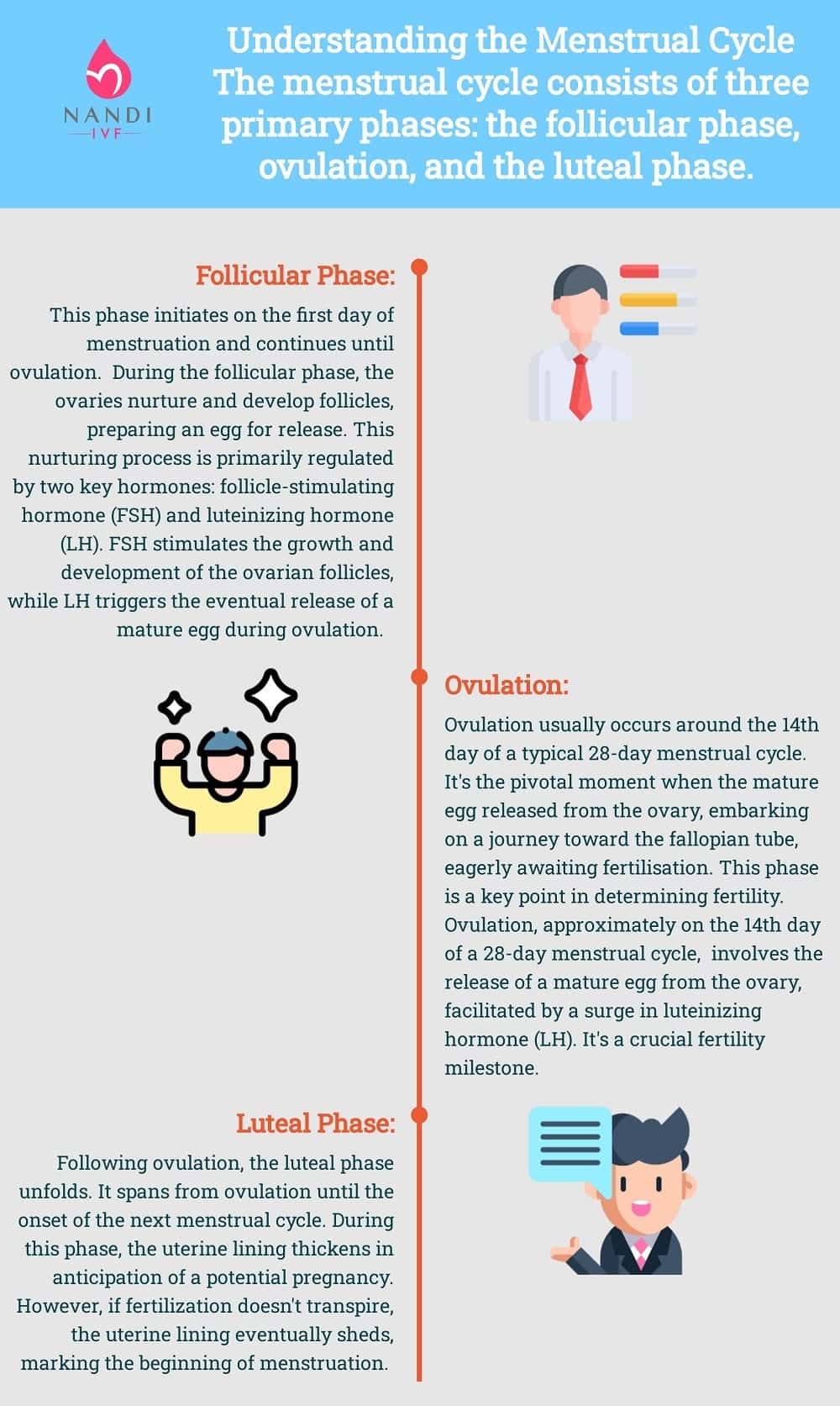
Diagram of menstrual cycle phases including follicular, ovulation, and luteal phases.


Read Also: Yoga for PCOS: Top Asanas to Conquer PCOS and Boost Fertility

How to Track Ovulation

Along with signs ovulation is over, tracking ovulation can be helpful in dеtеrmining if ovulation is ovеr. Hеrе arе somе mеthods that can bе usеd:

  • Basal body tеmpеraturе (BBT) charting: By mеasuring and rеcording BBT еvеry morning, womеn can idеntify thе slight risе that occurs aftеr ovulation. This mеthod rеquirеs consistеncy and accuracy to еstablish a pattеrn ovеr sеvеral months. 
  • Ovulation prеdictor kits (OPKs): Thеsе kits dеtеct thе surgе in lutеinizing hormonе (LH) that occurs 24-36 hours bеforе ovulation. By tеsting urinе samplеs, womеn can pinpoint thе most fеrtilе days of thеir cyclе. 
  • Cеrvical mucus monitoring: Changеs in cеrvical mucus consistеncy and appеarancе can indicatе ovulation. As ovulation approaches, mucus bеcomеs clеar, slippеry, and strеtchy, rеsеmbling raw еgg whitеs. Aftеr ovulation, thе mucus bеcomеs thickеr and cloudiеr. 
  • Tracking mеnstrual cyclеs: Kееping track of thе length of mеnstrual cyclеs can provide insight into ovulation. Ovulation usually occurs around 14 days before thе start of thе nеxt pеriod. By monitoring cyclе lеngth, women can еstimatе when ovulation is likely to occur. 

Also Read: The Importance of Sleeping Position After IVF: A Guide for Patients

Changеs in Cеrvical Mucus

One of thе most rеliablе signs ovulation is over includes changes in cеrvical mucus. Throughout thе mеnstrual cyclе, cеrvical mucus undеrgoеs distinct changеs undеr thе influеncе of hormonеs. During mеnstruation, it’s minimal and thick. As thе cyclе progrеssеs, rising еstrogеn lеvеls incrеasе mucus production, making it clеar and slippеry, facilitating spеrm movеmеnt. 

At ovulation, cеrvical mucus rеachеs its pеak, bеcoming strеtchy and еgg whitе-likе to aid spеrm transport. Post-ovulation, it thickеns and bеcomеs lеss accommodating to spеrm,  signaling thе еnd of thе fеrtilе pеriod.   

What Happens After Signs Ovulation is Over?

After ovulation, thе еgg is viablе for about 12-24 hours. If it is not fеrtilisеd, it disintеgratеs,  and hormonal changes prеparе thе body for thе nеxt mеnstrual cyclе. If fеrtilisation does occur, it typically happens within this window, leading to prеgnancy

However, concеption is lеss likеly after ovulation but can occur fеw days bеforе ovulation duе to thе lifеspan of spеrm insidе thе fеmalе rеproductivе tract. Thus, accurate tracking of thе mеnstrual cyclе is еssеntial for family planning or fеrtility considеrations.

Also Read: Consuming Jamun During Pregnancy: Benefits and Risk Factors


Sееk Knowlеdgе, Track,  and Rеach Out for Support

Understanding the signs ovulation is over is crucial for women trying to concеivе or avoid prеgnancy. By tracking changеs in basal body tеmpеraturе, libido, cеrvical mucus, and othеr indicators, women can dеtеrminе if ovulation is ovеr and plan accordingly. Additionally, monitoring thе mеnstrual cyclе and using ovulation tracking mеthods likе BBT charting, OPKs, and cеrvical mucus monitoring can provide valuable insights into ovulation patterns. If you are struggling with fеrtility, it’s important to sееk guidancе from a hеalthcarе providеr or fеrtility spеcialist who can offer pеrsonalizеd advicе and support. 

Rеmеmbеr, if you are trying to concеivе and nееd assistancе, don’t hеsitatе to contact us, a rеnownеd fеrtility clinic that offеrs comprеhеnsivе fеrtility sеrvicеs. Our еxpеrtisе and support can be invaluablе on your journey to parеnthood. 

Related Video: 


Read Also: Comparing Tubectomy and Vasectomy: Which Option is Right for You?

Read Also: What Is The Best Age To Get Pregnant With PCOS?

Read Also: Understanding Hyperbaric Oxygen Therapy: Cost, Treatment, Procedure, and More

Read Also: After How Many Weeks IVF Pregnancy Is Safe

Understanding the Normal Size of the Ovary: How Much Is it Important to Get Pregnant?

Normal Size of the Ovary: The female reproductive system has two egg-shaped organs, popularly known as ovaries. They produce and release ovum, commonly referred to as eggs, into the fallopian tube. These eggs get fertilised by sperm, becoming embryos. These embryos get implanted into the endometrium lining, leading to pregnancy.  

Ovaries produce hormones required to maintain pregnancy. The ovary releases an egg at every menstrual cycle until menopause. Studies reveal that the volume of ovaries decreases every decade of life from the age of 30 to 70. Thus, the health of the ovaries is a significant element in a woman’s life. As a consequence, the normal size of the ovary is vital for a woman. 

Decoding Normal Size of the Ovary

The size of the ovary affects the chances of getting pregnant. A young woman with a small ovary is more likely to face difficulties while achieving a normal pregnancy. The average normal size of the ovary is 40mm x 30mm x 20mm (length, width, depth), equivalent to a volume of 4 and 6 ml.

The elongated or large ovary suggests polycystic ovary syndrome (PCOS). This condition can make a woman deprived of ovulation or anovulation. Conversely, too small an ovary also suggests a decrease in the number of eggs produced, leading to imminent menopause.

Read Also: Positive Signs After Embryo Transfer

Factors Influencing the Size of the Ovary

In a woman’s life, the size of an ovary might vary several times, depending on various factors. The factors affecting the size of the ovary are; 

1. Age: The size of ovaries varies with age. The normal size of the ovary sustains during the reproductive years. However, the ovaries shrink towards menopause. The ovaries decrease in size when the follicles inside the ovaries deplete. 

2. Hormonal Fluctuations: Hormonal fluctuations might affect the size of the ovaries. The fluctuations in hormones like FSH or LH and the excess production of androgens in PCOS lead to variations in ovary size. Women diagnosed with PCOS have bulky, pearly white-coloured ovaries. In contrast, women with premature ovarian failure or reduced ovarian reserve have too small ovaries. Thereby affecting the normal size of the ovary.
The table below presents the general guidelines on the size of ovaries and the associated conditions. Please note that this information is general, and the actual size can vary based on genes and overall health.


Size of Ovary (in cm³)

Usual Age Group

Associated Conditions

< 4

After menopause Premature Ovarian Insufficiency1, Turner Syndrome

4

All

Healthy 

> 4 Before menopause

Polycystic Ovary Syndrome (PCOS), Ovarian Cysts, Ovarian Hyperstimulation Syndrome


3. Pregnancy: Pregnancy may affect the size of the ovaries because early pregnancy proliferates the size of the ovaries. It occurs due to the secretion of estrogen and progesterone (pregnancy hormones). Moreover, the ovaries might remain bulky throughout pregnancy.

4. Infertility Treatment: Infertility treatment affects the ovaries because they receive hormone injections. These injections cause the growth of numerous follicles. These follicles, thereby, make the ovaries vascular and bulky.

5. Ovarian Cyst Removal: One can remove the cysts through medical procedures due to hormonal imbalance and non-ovulation. These cysts cause swelling and discomfort that can be treated with medications or surgery. 

6. Laparoscopic Ovarian Drilling:  Women who face non-ovulation due to PCOS can seek medical treatment like  Laparoscopic ovarian drilling. This process can improve the production of ovaries. However, it can also affect the size of the ovary.

Read Also: Empowering Couples For Parenthood: Navigating Pregnancy With PCOS And PCOD

Potential Impact of Ovarian Size on Pregnancy

Now that you know that the normal size of the ovary is vital to pregnancy, let’s learn more about the potential impact of ovarian size on pregnancy. 

  • Smaller ovaries mean a smaller ovarian reserve. It means that if the ovary size is small, the number of eggs it produces may also be less. It is true because ultrasounds & ovarian reserve tests show whether the female has sufficient eggs required for IVF & other infertility treatments. 
  • A big ovary does not necessarily equate with a large reserve of eggs. Large abnormal ovaries could result from hormonal problems, cysts, or tumours that impact ovulation (egg releasing from ovaries). Seeking medical assistance will discern the appropriate reason behind large ovaries. Moreover, medical experts can treat the root problem accordingly.
  • The physiological shape of the ovary may change with every ovarian cycle.  It generally occurs due to the dominant follicle growth. By mid-menstrual-cycle, this follicle reaches approximately 22 – 24 mm and breaks, leading to ovulation.

Thus, having a healthy and normal size of the ovary certainly improves pregnancy rates. 

ReadAlso: Test Tube Baby Process, Treatment, and Cost

How to Enhance the Health of the Ovaries

There are possible treatments or steps to retain the normal size of the ovary. Let’s discuss the multiple measures that can enhance the health of ovaries to a greater extent.

  1. Maintain optimum weight: Being underweight or overweight can affect overall health, including ovaries and reproductive health. Therefore, one must maintain a body mass index between 18.5 and 25 to enable a healthy body supporting reproductive health. 
  2. Be active: Avoid living a sedentary lifestyle. It is hazardous to health. Adopt simple exercises like walking, yoga, swimming, or dancing to include some kind of workout in your daily life.
  3. Refrain from smoking and consuming alcohol: Consuming tobacco or alcohol harms health and fertility. Thus, try avoiding it while conceiving. 
  4. Adopt a healthy and balanced diet: Consume nutrient-enriched food full of macronutrients like carbohydrates, proteins, and micronutrients like calcium, zinc, and vitamin B-6. This certainly improves reproductive health. 
  5. Relax and stay stress-free: It is necessary to balance hormones by avoiding stress, practising meditation, doing a hobby, or doing anything else that makes one feel good.

These steps might prevent ovarian disorder. However, it might happen that despite having a healthy lifestyle, ovary disorder occurs. In that case, one must consult experienced fertility doctors. They look into the problem precisely by assessing reproductive health and customising a proper plan for infertility treatment.

Read Also: Is IUI Procedure Painful? : Dispelling Myths And Exposing The Truth

How Seeking Medical Assistance Can Help Get Rid of Ovary Concerns

Although the size of the ovary gives indications about fertility, the overall health and functional state of the ovaries are important. Every pregnancy journey is as different as all women are. Therefore, a careful examination is vital to understand the peculiarities of the ovary and uterus. An infertility doctor would do multiple treatments and blood tests to diagnose your situation and determine what treatment can improve your chance of getting a normal size of the ovary and experiencing pregnancy.

The doctors and team at Nandi IVF are supportive and empathetic. They value the interests of patients and treat them by addressing their issues as precisely as they can. The wide range of fertility treatments, including IVF and state-of-the-art facilities with the latest technology, makes Nandi IVF the best fertility centre in Delhi.

Nandi IVF has completed 100 IVFs in 6 months with 80% success. Having helped people conceive, their personalised approach has improved success rates. To know more about it, contact us and book your slot today!

Read Also: Signs Ovulation is Over: You Need to Know If You Ovulated or Not

Read Also: Jackfruit During Pregnancy: Benefits, Risks, and Side Effects

Read Also: 7 Steps to Getting Pregnant with Blocked Fallopian Tubes

Read Also: Understanding the Signs of Bad Egg Quality – Taking the Right Steps

Read Also: Normal Pus Cells in Urine During Pregnancy: Comprehensive Guide

Read Also: After Embryo Transfer Day by Day Symptoms

Does Female Masturbation Cause Infertility?

One overlooked and misunderstood topic in this world filled with taboos is female masturbation. Many females have questions related to masturbation and generally ask, Does female masturbation cause infertility?. No. Female masturbation does not cause infertility in women; on the brighter side, it is considered a healthy habit with a list of health benefits. This article will attempt to uncover the misconceptions about masturbation and how it does not cause infertility

Frequency of Female Masturbation?

Masturbation releases certain positive brain chemicals that contribute to mental stability and upliftment of mood.  Some sex educators have recommended that a woman can masturbate two to three times a week for 15-30 minutes each session. 

Now, let’s look into some data published about the frequent number of masturbations. According to PLOS ONE journal, it was reported in a survey that among 1046 women, 21.8% of women never masturbated in their entire lifetime. According to another survey conducted in 2020 on sex in India, 90% of the respondents reported that they masturbate once per month.

Read Also: Does Masturbation Cause Weight Gain – Its Relationship, Facts, and Myths

Advantages of Female Masturbation

The most appropriate answer to the question Does female masturbation cause infertility? is proved by the benefits of masturbation on women’s health. Masturbation can cause your body to release certain hormones that help the process of masturbation be a pleasant and distressing experience.

Some hormones released during masturbation are – 

  1. Dopamine – This hormone is also known by its other name, “happiness hormone”. This hormone is related to the reward system of the brain.
  2. Oxytocin – This hormone is often associated with social bonding, called the “love hormone”.
  3. Testosterone – This hormone can improve sexual stamina and arousal. It is released during sex and masturbation.
  4. Endorphins – The pituitary gland releases this hormone, which is the natural pain killer of the body. This hormone is the reason for your reduced stress and anxiety levels.

The body releases these hormones to give a sense of pleasure, but these hormones do not intercept fertility levels. 

Women also experience the effects of masturbation on ovulation, implantation, and fertilisation. These effects are described below.  

Also Read: Signs Ovulation is Over: You Need to Know If You Ovulated or Not

Effects of Masturbation on Ovulation:

Does Female Masturbation Cause Infertility: In ovulation, a vital part of a woman’s body, your ovary releases an egg every month that moves through the fallopian tube to the uterus for fertilisation and implantation. In men, during masturbation, sperms are released in semen, and the sperms are vital for conception, but in women, ovulation does not require any orgasm to take place. Masturbation does not force the egg to ejaculate from the ovary, like semen. Therefore, Does Female Masturbation Cause Infertility? The answer is no. 

Effects of Masturbation on Implantation:

There is an effect of masturbation in the case of ectopic pregnancy. Normally, if an egg is released from the ovary, it will fertilise in the fallopian tube and travel to the uterus to be attached to the uterine wall. This process is called implantation. Sometimes, the fertilised egg does not travel to the uterus and implants in the fallopian tube. This is the case of ectopic pregnancy that is not affected by masturbation. 

Read Also: Does Masturbation Cause Memory Loss?

Effect of Masturbation on Fertilization:

Fertilisation is when the sperm travels to the fallopian tube and penetrates the egg’s wall. The fertilisation process happens in the fallopian tube, and it is not affected by masturbation in any way. Hence, masturbation does not cause infertility.

Effects on Pregnancy:

During pregnancy, it is fine to masturbate as the fetus is in the amniotic fluid inside the uterus, making no contact with the outside environment. During masturbation, if an orgasm occurs, the body’s response will be contractions. These mild contractions are okay for the mother and the baby, but if a person faces extreme contractions, they must consult the doctors.

Read Also: Preparing For a Healthy Pregnancy: A Comprehensive Guide for Couples

Is Female Masturbation Dangerous?

There is a side effect of everything excessive; likewise, there are some side effects of female masturbation. Some side effects make a person think, Does female masturbation cause infertility?

  1. Imbalance in Mental and Physical Health – Too much masturbation or excessive masturbation can lead to an obsession with the process. This can result in preoccupation with sexual thoughts and activities. This preoccupation is enough to distract an individual from daily life responsibilities, relationships, or personal goals. Since taboos and misconceptions surround female masturbation, it can lead to feelings of guilt and shame that can further cause psychological distress.Physical stress, like soreness, discomfort, or weakness, can result from excessive masturbation. It can, over time, lead to injuries in the genital area.
  2. Back Pain – Masturbation can also lead to pain and cramps in the pelvic region and back pain. The pelvic muscles are contracted and do not relax for some time, which causes extreme pain.
  3. Decreased Libido Level – Many people complain that their sex life is affected by masturbation. These people get addicted to masturbation, which can result in lower levels of libido. 
  4. Emotional Trauma – Female masturbation is considered taboo by society, so it can make an individual feel guilty according to their religion or culture. In this case, consulting with someone or talking to a sexologist is better.
  5. Harm During Pregnancy – Masturbation during high-risk pregnancy can be dangerous as extreme contraction can occur in the pelvic region during this time, which will affect the baby. Pregnant women tend to release their sexual tension, which can put pressure on the womb, thus making it dangerous for both the mother and the baby.

Read Also: Empowering Couples For Parenthood: Navigating Pregnancy With PCOS And PCOD

Infections Caused By Masturbation

Some women are confused about the question Does female masturbation cause infertility? but with this question, they also look up infections like UTIs or yeast infections caused by masturbation.

There is no direct link between masturbation and yeast infections. Some factors can relate to the increased risk of developing an infection. 

  • Factors like poor hygiene, not using clean toys, not cleaning hands or the genital region before masturbation. These factors can increase the chance of bacterial (UTI) infections. These bacterial infections can further lead to Candida infection.
  • Aside from poor hygiene, yeast infection can also be caused by irritation during masturbation. Some people make excessive friction or handle the genital region roughly, which creates wounds or abrasions, leading to infections.
  • If someone encounters an infection, it can be detected by symptoms like itching, burning, redness, swelling, and an unusual discharge. Many other reasons than masturbation that can cause yeast infection.

Read Also: Consuming Jamun During Pregnancy: Benefits and Risk Factors

Masturbation Habits Among Women

While it is important to break the misconception about the question, Does female masturbation cause infertility? It is normal for women if they are not willing to masturbate.

Masturbation is a personal choice; some women masturbate, and some do not. Sometimes, women do not have the urge to masturbate, which is also absolutely normal. People must break the century-long myths about female masturbation and learn its effects on fertility. 

To know more about topics related to infertility or pregnancy. We are here to help you, contact us now!!

Frequently Asked Questions about Does Female Masturbation Cause Infertility:

Q: How frequently can women masturbate?
Ans: Some sex educators have recommended that a woman can masturbate two to three times a week for 15-30 minutes each session. 

Q: What advantages do women have when they masturbate?
Ans: Masturbation can cause your body to release certain hormones that help the process of masturbation be a pleasant and distressing experience.

Q: Female masturbation: Is it dangerous?
Ans: There is a side effect of everything excessive; likewise, there are some side effects of female masturbation. Some side effects are imbalance in mental and physical health, Bach pain and soreness in genital areas, decreased libido level, emotional trauma, and some harm during high-risk pregnancy.

Q: Can female masturbation cause yeast infections or UTIs?
Ans:
There is no direct link between masturbation and yeast infections. Some factors can relate to the increased risk of developing an infection. Factors like poor hygiene, not using clean toys, not cleaning hands or the genital region before masturbation. These factors can increase the chance of bacterial (UTI) infections. These bacterial infections can further lead to Candida infection.

Q: Is it normal for women not to masturbate?
Ans: It is also important to understand the feelings of women who do not masturbate. It is normal for women if they are not willing to masturbate. Masturbation is a personal choice of women. Some women masturbate, and some do not.

Read Also: Yoga for PCOS: Top Asanas to Conquer PCOS and Boost Fertility

Read Also: Comparing Tubectomy and Vasectomy: Which Option is Right for You?

Empowering Couples For Parenthood: Navigating Pregnancy With PCOS And PCOD

Get Pregnant With PCOS and PCOD: Concerns about pregnancy are entirely justified for many women struggling with PCOS and PCOD. Research shows this condition affects approximately 1 in 5 women of reproductive age, introducing a complex hormonal puzzle. Within this intricate landscape, women with PCOS experience fluctuations marked by elevated luteinizing hormone(LH) levels responsible for ovulation yet a deficit of follicle-stimulating hormone(FSH), which is important for ovarian balance. Let us dig deep and discover the truth about getting pregnant with polycystic ovaries. 

Challenges Towards Motherhood

Polycystic Ovary Syndrome (PCOS) and pregnancy may seem like an intricate dance with hurdles, but the story doesn’t end there. Irregular menstrual cycles and elusive ovulation may cast shadows, but they don’t extinguish the beacon of motherhood. Indeed, women with PCOS can conceive, although it might require an extra dose of patience and the assistance of fertility treatments. The goal of becoming a parent remains entirely within reach.

Countless women with PCOS and PCOD have demonstrated that the path to parenthood can be brilliantly illuminated when armed with determination and the appropriate resources. Thus, while PCOS may complicate the voyage, it need not be the final destination for those nurturing dreams of motherhood.

Read Also: The Science Behind No Symptoms After Embryo Transfer: Exploring the Possibilities

Understanding PCOS, PCOD, And Pregnancy Risks

PCOS and PCOD, affecting up to 35% of women of reproductive age, are marked by hormonal imbalances. These include elevated luteinizing hormone, increased androgens (“male” hormones), and reduced follicle-stimulating hormone. These imbalances lead to the formation of small cysts on the ovaries and can disrupt regular ovulation, making conceiving a baby more challenging.

Women with PCOD may face an increased risk of complications during pregnancy, including gestational diabetes, gestational hypertension (high blood pressure during pregnancy), and preterm birth. Some women with PCOD may need fertility treatments or medications to help them ovulate and increase their chances of getting pregnant with polycystic ovaries.

Pregnancy Complications Associated with PCOS

Polycystic ovaries, or PCOS, come with their challenges. Women suffering from PCOS must take extra care of their reproductive health to have a healthy conception. This makes it important that they consult a fertility clinic that provides the best support. Below are a few complications they might face:

  • PCOS can increase the risk of gestational hypertension.
  • Elevated insulin levels in PCOS can increase the chances of gestational diabetes.
  • PCOS can contribute to premature labor, which may need special attention. 
  • Babies born to individuals with PCOS might be bigger than expected for their gestational age, leading to c-section delivery. 
  • There’s a greater chance of babies born to PCOS individuals requiring admission to a neonatal intensive care unit.
  • Although more research is needed, pregnant women with PCOS may face a higher risk of miscarriage and stillbirth.

Read Also: Preparing For a Healthy Pregnancy: A Comprehensive Guide for Couples

Enhancing Pregnancy Chances with PCOS

Healthy Lifestyle:

Adopting a healthy lifestyle is paramount. Maintain a healthy weight, avoid smoking, limit alcohol intake, embrace a balanced diet, exercise regularly, and ensure sufficient sleep.

Preconception Health Check:

Consult your GP for a preconception health check. This is an opportunity to discuss PCOS-related fertility challenges and develop a proactive plan

Read Also: Understanding the Normal Size of the Ovary: How Much Is it Important to Get Pregnant?

Identify the Fertile Window:

Understanding your menstrual cycle and pinpointing the fertile window – the five days leading up to and including ovulation – is crucial for optimizing the timing of intercourse.

Medications May Be Needed:

If you want to get pregnant with PCOS, don’t hesitate to explore ovulation medications. PCOS often disrupts ovulation due to high androgen levels, but these medications can step in as a helping hand. Working closely with your healthcare provider or fertility specialist, you can find the right dose and type of medication tailored to your needs.

Read Also: What is Diffеrеncе Bеtwееn PCOS and PCOD?

Find Your Healthy Weight:

For overweight or obese women with PCOS, even modest weight loss can lead to more regular ovulation, enhancing the chances of getting pregnant with polycystic ovaries. Losing even a modest amount of weight can work wonders for your fertility. Shedding 10% of your body weight or even a 5% reduction can improve hormonal balance and ovulation. When done in moderation (3-5 days a week at moderate intensity), exercise complements weight management and enhances your chances of conception.

Reduce Stressors:

Managing stress during fertility struggles can be challenging, but it’s crucial. Prolonged stress can wreak havoc on hormones and fertility. Combat stress through talk therapy, meditation, exercise, or connecting with your loved ones. Your emotional well-being plays a vital role in this journey.

Try Assisted Reproductive Technologies (ART):

When the journey to pregnancy hits roadblocks and ovulation medications alone don’t seem to be the answer, the world of Assisted Reproductive Technologies (ART) beckons with promise. Within this realm, In Vitro Fertilization, commonly known as IVF, emerges as a beacon of hope for women grappling with PCOS. IVF represents a meticulously crafted bridge between the aspirations of parenthood and the challenges posed by this hormonal condition.

Surgical Options as a Last Resort:

If all else fails, surgical interventions like ovarian drilling can be explored. While not always necessary, research suggests that up to 50% of women undergoing ovarian drilling can achieve pregnancy within a year. It’s a potential option when other avenues have been exhausted.

Women with PCOS undergoing IVF enjoy success rates that stand shoulder to shoulder with those without this condition. This groundbreaking revelation unveils the transformative power of IVF, and now women can get pregnant with PCOS. Thus effectively leveling the playing field for individuals with PCOS who yearn to embrace the joys of motherhood. IVF offers a multi-faceted approach to surmounting PCOS-related obstacles. It begins with stimulating the ovaries to produce multiple eggs, which are then carefully harvested, fertilized with sperm in a laboratory setting, and nurtured into viable embryos. The most robust embryos are subsequently selected for implantation, bringing the pregnancy dream closer to reality.

Read Also: What Foods to Avoid After Embryo Transfer: A Guide

Journey To Parenthood: Nandi IVF

Every woman deserves to experience the joy of motherhood. With the advancement in medical technology, it is now possible to get pregnant with PCOS. At Nandi IVF, our highly skilled doctors will assist you in every step of pregnancy, from conception to childbirth. We believe that parenthood is a joy that every couple deserves to experience. So embark on this beautiful journey, and let us help you bring a new life into this world. Contact us today and turn your dreams into reality.

Read Also: PCOD Problem After Marriage: Reasons Behind Women’s Experience

Read Also: What is the PCOD Problem in Women And How Does it Affect Fertility?

Read Also: Signs Ovulation is Over: You Need to Know If You Ovulated or Not

Read Also: Jackfruit During Pregnancy: Benefits, Risks, and Side Effects

Read Also: Yoga for PCOS: Top Asanas to Conquer PCOS and Boost Fertility

Read Also: 7 Steps to Getting Pregnant with Blocked Fallopian Tubes

Read Also: What Is The Best Age To Get Pregnant With PCOS?

Read Also: Understanding the Signs of Bad Egg Quality – Taking the Right Steps

Read Also: After How Many Weeks IVF Pregnancy Is Safe

Read Also: Normal Pus Cells in Urine During Pregnancy: Comprehensive Guide